
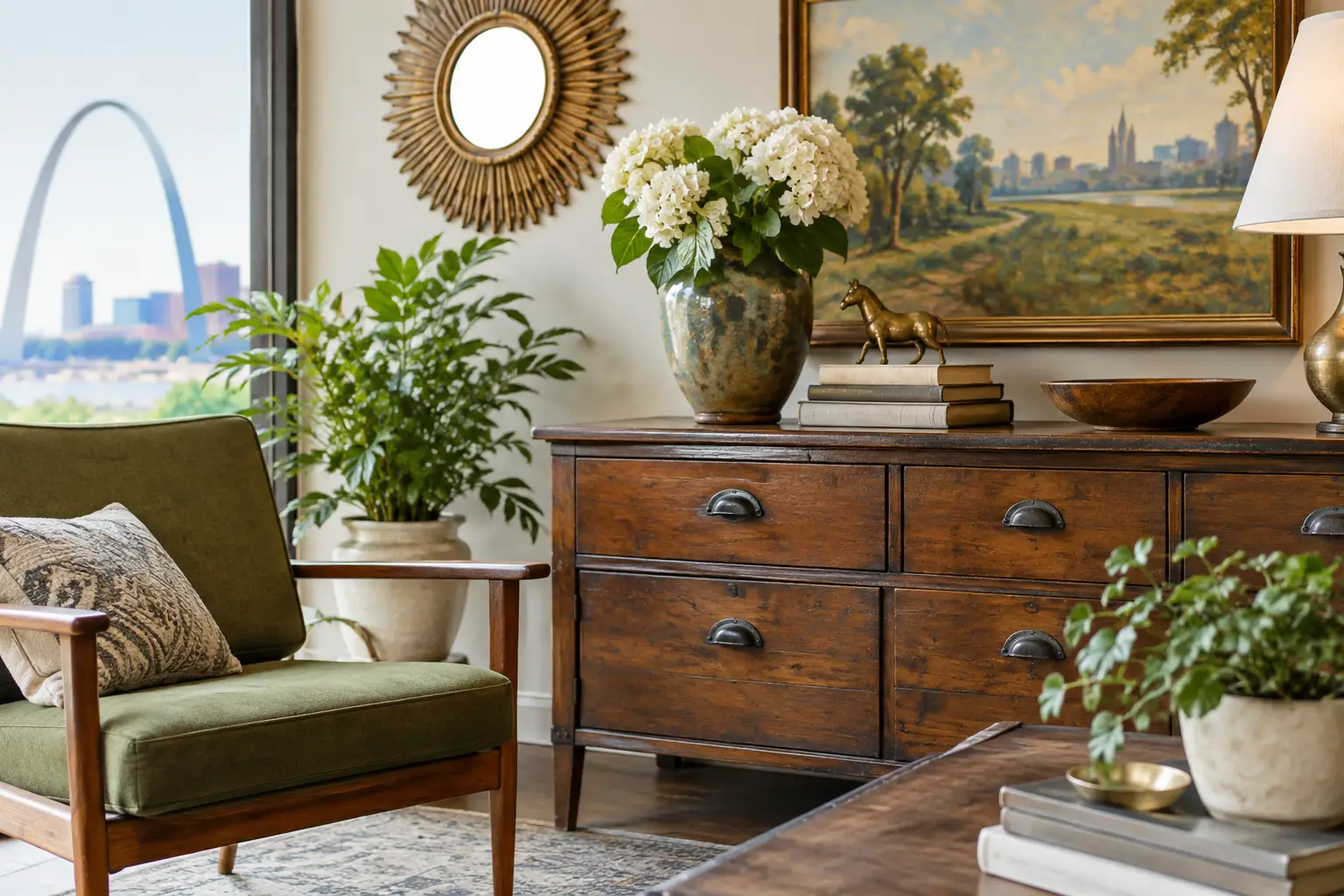
A walnut credenza with solid drawer construction. A brass floor lamp with a little patina. A framed landscape that makes a plain hallway feel finished. The appeal of vintage home decor St. Louis shoppers seek is not simply that it is old. It is the chance to bring home something with materials, details, and a point of view that new mass-market pieces often miss.
That does not mean every vintage piece belongs in every room. The best finds are the ones that work for the way you live: a dining table that seats your family, a cabinet that solves a storage problem, or an accent chair that adds character without crowding the room. Shopping locally gives you the advantage of seeing scale, color, condition, and comfort for yourself before making a decision.
Why Vintage Home Decor Works So Well in St. Louis Homes
St. Louis homes are rarely blank boxes. A South City bungalow, Central West End apartment, mid-century ranch, Clayton condo, or historic brick home each comes with its own proportions and personality. Vintage furniture and decor can meet that character without turning a room into a period set.
Well-made older furniture also offers practical value. Many pieces were built with hardwood frames, real wood veneers, dovetailed drawers, substantial hardware, and repairable construction. A new piece may look less expensive at first, but a sturdy pre-owned chest, dining set, or bookcase can offer more material quality for the money.
Then there is the matter of individuality. Matching furniture sets can make a room easy to buy, but they can also make it forgettable. A vintage Art Deco cabinet beside a clean-lined modern sofa, or a traditional wood table paired with contemporary dining chairs, creates a home that looks collected over time. The goal is not perfection. It is a room that feels like it belongs to the people who live there.
Vintage is also a practical choice for shoppers who care about keeping useful furnishings in circulation. Choosing a pre-owned piece extends its life and keeps one more quality item out of the waste stream. That benefit matters most when the item is still useful, structurally sound, and genuinely suited to your space.
Start With the Job the Piece Needs to Do
The fastest way to make an expensive mistake is to shop only by style. Before you fall for an ornate mirror or a Danish-inspired sideboard, decide what problem it needs to solve.
A bedroom may need a tall chest because floor space is limited. An entryway may need a narrow console with room for keys and mail. A living room might need one comfortable occasional chair rather than another decorative table. Once the job is clear, you can judge an item on more than its first impression.
Measure before you shop, and bring those measurements with you. Note the width, depth, and height of the available space, but also consider the route into the home. Apartment hallways, stair landings, elevators, narrow doorways, and low basement ceilings can change what is realistic. For upholstered furniture, measure the piece and the clearance needed to turn it through the door.
Scale matters just as much as dimensions. A low, long mid-century credenza can visually calm a room with standard-height ceilings. A tall breakfront may be beautiful, but it can overpower a compact dining area. In a large room, one small vintage table can get lost unless it is supported by artwork, lighting, or a larger seating arrangement.
What to Look for When Buying Vintage Furniture
Age alone does not guarantee quality. Condition, construction, and function should guide the purchase. Open the drawers. Sit in the chair. Check the doors, hinges, and latches. Look under the table and beneath the upholstery when possible. These simple steps reveal much more than a quick photo ever can.
For wood furniture, small scratches, finish wear, and minor dings are often part of the appeal and can be expected on a pre-owned piece. More serious concerns include loose joints, active veneer lifting, water damage, strong odors, significant warping, or drawers that will not operate. Some repairs are straightforward; others are better accepted only when the price and the piece justify the work.
Upholstered furniture requires a different eye. Look for a solid frame, supportive seat cushions, stable legs, and fabric that works with your household. A vintage sofa with excellent bones may be worth reupholstering, especially when it has a distinctive silhouette or quality frame. On the other hand, a low-priced chair is not automatically a value if the structural repairs and new fabric will cost more than you want to invest.
Lighting and decorative objects deserve a careful look, too. Inspect lamps for overall condition and ask about wiring if it appears original or worn. With art, focus on what you enjoy first, then check the frame, glass, backing, signature, and any labels or provenance that may accompany it. You do not need to be a collector to buy art, but you should choose a piece you will be happy to see every day.
Mix Eras Without Making the Room Feel Busy
A home does not need to commit to one decade. In fact, the most welcoming rooms often combine different periods through a few consistent elements: wood tone, color palette, shape, or texture.
If you have a streamlined contemporary sectional, a vintage coffee table with warm wood grain can keep the room from feeling too new. If your dining table is traditional, consider simpler chairs or a modern pendant light to create contrast. A black metal lamp can connect industrial shelving to a more formal antique case piece. Repeating one color - olive, rust, navy, cream, or brass - can make unrelated finds feel intentional.
Be careful with too many competing focal points. An ornate carved buffet, a bold patterned rug, a dramatic chandelier, and a gallery wall may all be excellent individually, but together they can make a room feel crowded. Let one or two pieces take the lead, then use quieter items around them.
This is where smaller vintage decor earns its place. A ceramic bowl, brass candlestick, framed print, tray, set of bookends, or decorative mirror can add age and warmth without committing the room to a major furniture change. These items are especially useful for renters, first-time homeowners, and anyone refreshing a room in stages.
Shop the Changing Inventory With a Clear Plan
Consignment shopping rewards regular browsing because one-of-a-kind inventory changes quickly. The piece that fits your room, budget, and taste may be there this week and gone the next. That is part of the excitement, but it also means hesitation can cost you a genuinely good fit.
A helpful approach is to keep a short list on your phone with room measurements, preferred colors, needed categories, and a realistic budget. When you spot a piece, compare it to that list before deciding. This keeps an impulse purchase from becoming an unused project in the garage, while still leaving room for the unexpected find that makes a space feel special.
Photos and online listings are useful for narrowing your search, particularly when they identify dimensions, materials, makers, style, and condition. But an in-person visit answers the questions that pictures cannot: Is the fabric comfortable? Does the wood tone work with your floors? Is the chair the right height for your table? Can you picture the item in your home?
At St. Louis Consignment Gallery, the changing selection is part of the experience. You may find a practical bedroom chest one visit, an Art Deco accent the next, or the right artwork to complete a wall you have been considering for months. Ask for direct availability confirmation when you have your eye on a specific item, because distinctive pieces can sell quickly.
Plan for Pickup or Delivery Before You Buy
Transportation is not an afterthought when buying furniture. It is part of the purchase decision. Confirm dimensions, consider vehicle capacity, bring moving blankets and straps for pickup when appropriate, and make sure someone is available to help at home. Heavy case goods, glass-front cabinets, and large upholstered pieces are not ideal last-minute car projects.
Metro-area delivery can be the sensible option for larger items, especially when stairs, tight entries, or a busy schedule are involved. Before delivery day, clear the path, move rugs and fragile decor, and measure doorways one final time. If an item cannot fit through the entrance, neither good intentions nor a beautiful finish will solve the problem.
Vintage home decor should make daily life better, not create a storage problem or a delivery surprise. Choose the piece that fits your home as it is now, care for the materials it was made from, and give it a place where its character can be seen and used.