
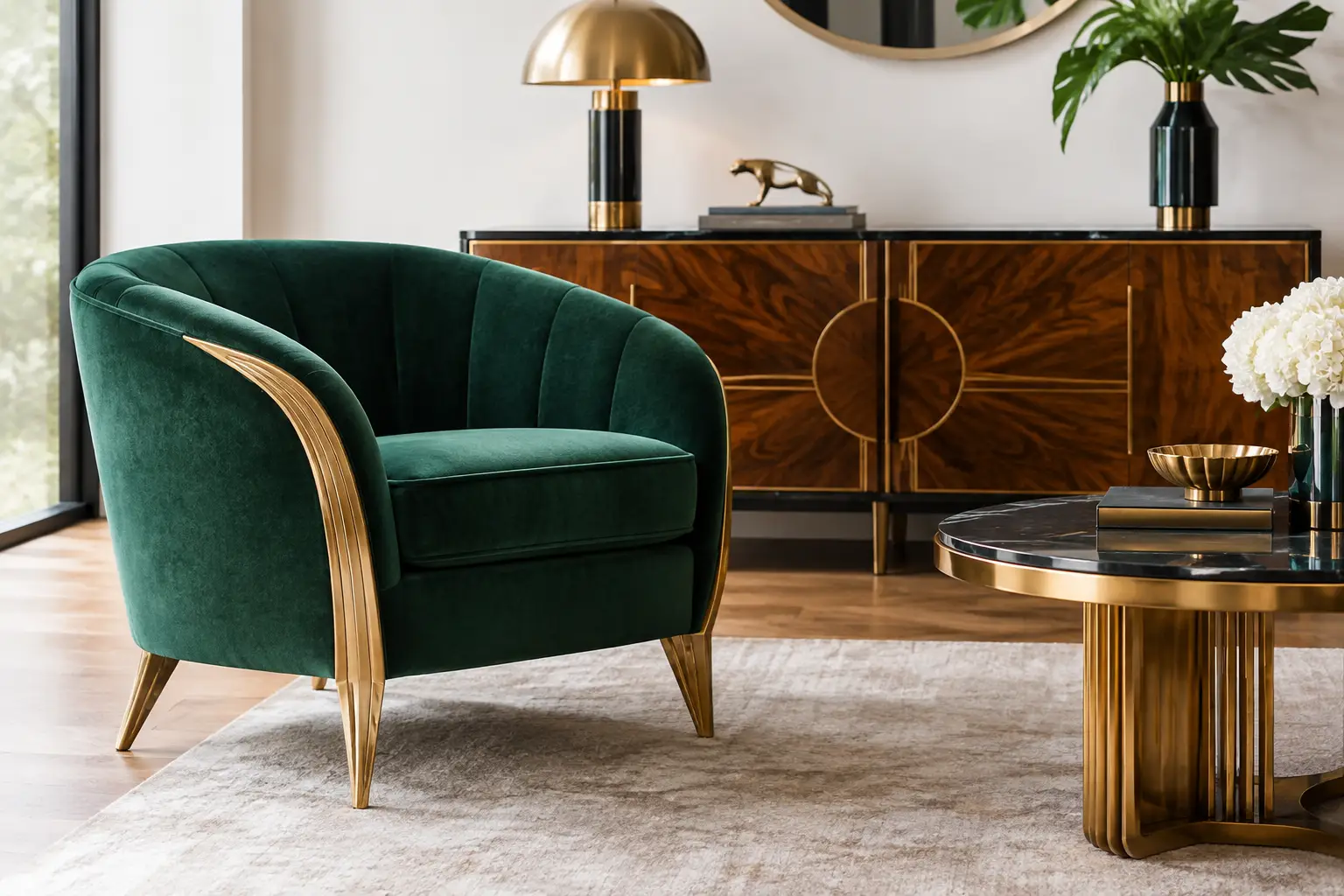
A curved-front walnut dresser. A chrome-and-glass cocktail table. A club chair with a low, generous profile. Art deco furniture has a way of making a room feel considered before you have added much else. Its shapes are confident, its materials are often substantial, and the best pieces carry the kind of visual presence that mass-produced furniture rarely matches.
For shoppers who want more character without buying a room full of museum pieces, Art Deco can be a practical place to start. A single cabinet, mirror, or occasional chair can bring warmth and structure to a newer home, a city apartment, or a traditional St. Louis living room. The key is knowing what you are looking at, what condition makes sense for your budget, and how to make a statement piece work in daily life.
What Defines Art Deco Furniture?
Art Deco emerged in the 1920s and reached its stride through the 1930s and early 1940s. It was modern for its moment, favoring streamlined silhouettes and decorative drama over the heavier ornament of earlier Victorian and revival styles. While there is plenty of variation, genuine period pieces often balance clean geometry with rich, tactile materials.
Look for stepped forms, rounded corners, waterfall edges, fan patterns, sunbursts, chevrons, and strong vertical lines. Veneers were especially important. Walnut, mahogany, bird's-eye maple, oak, and exotic-looking figured woods gave cabinets and bedroom suites movement and depth. Lacquered finishes, glass, mirrors, chrome, brass, and Bakelite-style hardware also appear frequently.
Not every Art Deco piece is glossy or glamorous. Some are restrained, especially American-made bedroom and dining furniture designed for ordinary households. A simple dresser with rounded drawer fronts and horizontal banding may be every bit as authentic as a mirrored Hollywood Regency-style console. The details matter more than the amount of shine.
Art Deco, Streamline Moderne, and later look-alikes
Art Deco is a broad label, and sellers sometimes use it for anything with a curved edge or a brass accent. Streamline Moderne is one related style you may encounter. Usually associated with the 1930s, it takes Deco's modern spirit in a more aerodynamic direction: smooth curves, horizontal lines, chrome trim, and forms inspired by trains, ships, and automobiles.
Then there are later reproductions and Deco-inspired pieces. These can still be attractive and useful, but they should be priced and described honestly. A 1980s black lacquer cabinet with brass pulls is not a 1930s original. It may be the right purchase for your space, especially if you want the look at a lower price, but age, construction, and condition affect value.
How to Evaluate Art Deco Furniture Before You Buy
The pleasure of shopping pre-owned is that no two finds are exactly alike. It also means you should give a piece more than a quick glance. Start with its structure. Open drawers, check the back, look underneath, and gently test whether a table or chair feels stable. Original hardware, drawer pulls, legs, and decorative veneers add appeal, though a careful restoration does not automatically make a piece less desirable.
On case goods, inspect veneer closely. Small surface scratches, faded finish, and minor edge wear are common on furniture approaching a century old. Loose veneer, deep cracks, water damage, and missing sections deserve more scrutiny. Restoration is possible, but matching figured wood veneers and original finishes can require specialized work.
Drawers tell an especially useful story. Dovetail joints, solid drawer boxes, and smooth operation suggest quality construction, even if a drawer needs a little adjustment. A musty odor, sticking drawers, or evidence of insect activity should prompt questions. With upholstered furniture, check the frame, springs, cushions, fabric condition, and whether the piece has been reupholstered. Reupholstery can make a vintage chair ready for years of use, but it should be factored into the price if it is still needed.
Provenance can be a bonus, not a requirement. A maker's label, stamp, original sales tag, or documented history may strengthen collector interest. But plenty of well-built, beautiful Deco furniture was never clearly marked. If you love the construction, materials, and design, an unmarked piece can still be a remarkable value.
Choosing the Right Piece for Your Room
Buying a complete period suite can create a dramatic, cohesive look, but it is not the only way to use Art Deco. In fact, one exceptional piece often has more impact than several smaller imitations. Consider the room's function first, then choose an item with enough visual weight to hold its place.
A waterfall dresser or tall chest can bring personality to a bedroom while offering real storage. A round or rectangular dining table with a striking veneer can anchor a dining space. In a living room, a petite cocktail table, bar cabinet, or pair of low chairs may be easier to incorporate than a large, formal sofa. Mirrors are another smart entry point: they add Deco geometry without consuming valuable floor space.
Scale is where many shoppers get surprised. Vintage furniture can be narrower than newer pieces, but it may also sit lower or have deeper proportions. Measure doorways, stairwells, elevators, and the intended wall before purchase. Note drawer clearance and table leaf storage, too. A beautiful sideboard is less useful if its doors cannot open comfortably in the dining room.
For a mixed room, let the vintage piece lead without forcing every item to match. A walnut Deco chest looks at home beside a neutral upholstered bed, linen curtains, and a simple contemporary lamp. Chrome and glass work well with leather, boucle, or clean-lined sofas. Repeat one or two colors or materials - warm wood, black accents, brass, or cream upholstery - and the room will feel connected rather than themed.
Condition, Restoration, and Value
There is no single correct condition standard for vintage furniture. A collector may prefer an original finish with honest wear. A household furnishing a busy home may prefer a professionally refinished surface and newly upholstered seats. Both choices can be sensible; it depends on whether you value untouched history, everyday durability, or a balance of both.
Originality generally matters most when a piece is rare, signed, or unusually well preserved. For a more common dresser or dining chair, thoughtful repairs can make the piece more usable without undermining its appeal. Avoid treating every scuff as a problem. Gentle patina can be part of the reason vintage furniture feels alive in a room.
Value is shaped by design, maker, condition, materials, completeness, and local demand. A matched bedroom suite may be harder to place than a single dresser, yet it can offer excellent value for a buyer furnishing several rooms. Likewise, an ornate cabinet might be collectible but less versatile than a clean-lined Deco table. Buy for your home first unless you are specifically building a collection.
Why Pre-Owned Is a Smart Way to Shop Deco
Art Deco furniture was made in many price ranges, from finely crafted luxury pieces to practical household furnishings. The pre-owned market gives shoppers access to both, often at prices that compare favorably with new furniture made to imitate vintage style. You also get the benefit of seeing the actual item rather than relying on a staged product photo.
At a local gallery, you can check color variation in the wood, sit in the chair, test the drawers, and decide whether the scale feels right. That matters with one-of-a-kind inventory. Photos are helpful, but they cannot replace seeing the grain of a walnut veneer or the way a curved cabinet front catches the light.
Inventory changes quickly, particularly when distinctive vintage pieces arrive. If an item has the size, condition, and design you have been seeking, it is worth confirming availability and making a plan for pickup or delivery. Transportation is part of the purchase, not an afterthought. Measure first, ask about delivery options, and protect the piece during the move.
St. Louis Consignment Gallery regularly sees furniture with the materials, craftsmanship, and individuality that make vintage shopping rewarding. A Deco find may be a complete suite, or it may be one small table that finally gives a room its point of view.
The best piece is not always the rarest or most formal one. It is the one you will use, notice, and enjoy every day - a well-made object with enough history to feel special and enough function to feel at home.