
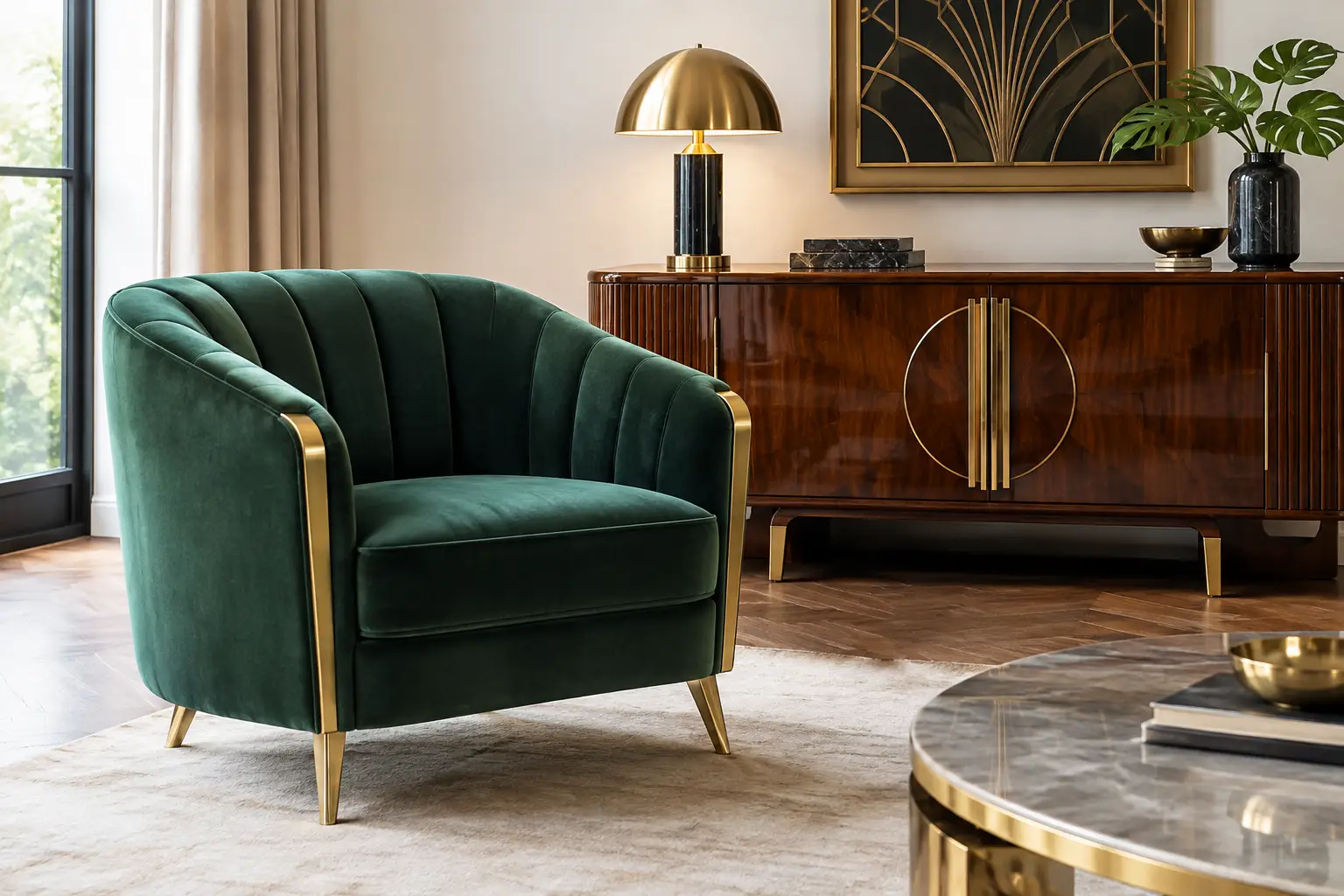
A cabinet with a shiny curved front, a waterfall-style dresser, or a chair with a bold stepped silhouette can stop you in your tracks. But how to identify art deco furniture when you are standing in front of a single vintage piece, especially one without a label, takes more than spotting a little chrome.
Art Deco furniture is expressive, polished, and often surprisingly practical. It was made for a period that admired speed, new technology, skyscrapers, travel, and glamour. Whether you are furnishing a full room or adding one distinctive piece, knowing the visual clues can help you separate true Art Deco character from a later reproduction or a loosely “Deco-inspired” design.
How to Identify Art Deco Furniture at a Glance
Art Deco emerged in the 1920s and remained influential through the 1930s and early 1940s. The style is defined by deliberate geometry. Look for strong vertical lines, stepped forms, rounded corners, fan shapes, sunbursts, zigzags, and repeating patterns that feel architectural rather than floral or rustic.
A good first question is this: does the piece feel streamlined and intentional? Art Deco furniture tends to look designed from every angle. Even a simple chest may have a curved waterfall front, contrasting veneer borders, horizontal drawer pulls, or a base that makes the case appear to float.
The style can move in two directions. Earlier, more luxurious Deco often uses dramatic veneers, lacquered surfaces, exotic woods, and ornate metal details. Later pieces may be cleaner and more machine-age in appearance, with chrome, tubular steel, glass, or rounded Streamline Moderne forms. Both can be authentic Art Deco, so do not dismiss a piece simply because it is less ornate.
Start With the Silhouette
Shape is usually the fastest clue. Art Deco favored visual motion and symmetry, even in heavy wood furniture. A dresser may rise in tiers like a city skyline. A sideboard may have a broad central curve flanked by straight, vertical cabinet doors. Club chairs are often low, substantial, and softly rounded, while occasional tables may feature circles, arches, or stacked geometric bases.
The waterfall dresser is one of the easiest American examples to recognize. Its top surface curves continuously down the front edge instead of ending in a sharp corner. These dressers were widely produced during the 1930s and can range from simple bedroom furniture to highly decorative pieces with bookmatched veneer and bold hardware.
Watch for these recurring design ideas:
- Stepped or tiered profiles that resemble skyscrapers
- Sunbursts, fans, chevrons, zigzags, and concentric circles
- Rounded edges paired with straight, vertical elements
- Symmetrical layouts with a strong center line
- Long horizontal pulls, often in chrome, Bakelite, or contrasting wood
A piece does not need every one of these traits. One dramatic silhouette paired with appropriate materials and construction can be more persuasive than a collection of decorative motifs added later.
Look Closely at Veneer, Metal, and Finish
Art Deco furniture often makes its materials part of the decoration. Rather than relying on carved ornament, makers used the grain and color of wood veneers to create pattern and contrast. Walnut, mahogany, maple, oak, and figured woods were common, as were more exotic-looking veneer effects in high-style pieces.
Bookmatching is a useful detail to notice. This is when two veneer panels are opened like pages in a book so the grain mirrors itself across a center line. On an Art Deco cabinet or dresser, bookmatched veneer can create a dramatic fan, flame, or butterfly effect. It is decorative, but it still feels clean and controlled.
Chrome is another familiar signal, especially on chairs, bar carts, lamps, and Streamline Moderne furniture. You may also find brass accents, mirrored panels, glass tops, black lacquer, ivory-tone details, or early plastics such as Bakelite. These materials were meant to suggest modernity and luxury.
Condition matters here. Original veneer with a few small repairs may be more desirable than a heavily sanded surface that has lost its crisp edges. On the other hand, lifting veneer, deep water damage, or a failing finish can affect both value and the cost of making a piece usable. Ask whether a finish appears original, refinished, or touched up, and inspect it in good light.
Check Construction Before Calling It Vintage
A glamorous look alone cannot date furniture. Reproductions have been made for decades, and some newer pieces borrow the same sunbursts, black lacquer, and gold-colored trim. Construction details help tell the fuller story.
On many original pieces from the 1920s through 1940s, drawers may use wood-on-wood runners, dovetail joints, and substantial solid-wood drawer boxes. Dovetails are helpful but not absolute proof of age, since quality furniture is still built with them. Look instead for a consistent combination of period-appropriate joinery, materials, wear, and hardware.
Turn a drawer over if possible. You may see age-darkened wood, old pencil marks, a maker’s stamp, or the natural unevenness of an older finish. Machine-cut dovetails were common by this period, so perfect-looking joints do not automatically mean a piece is new. The key is whether the whole piece makes sense together.
Hardware deserves a close look as well. Original pulls may show gentle wear where hands touched them most often. Screw holes that do not line up, bright new hardware against aged wood, or obvious filled holes can indicate replacements. Replacement hardware is not necessarily a reason to walk away, but it should affect how you assess originality and price.
Learn the Difference Between Art Deco and Nearby Styles
Art Deco is often confused with mid-century modern because both styles can be streamlined. The difference is in the mood. Mid-century furniture, generally from the 1940s through the 1960s, favors lighter forms, tapered legs, open space, and an organic relationship to materials. Art Deco is more theatrical and architectural. It tends to use stronger symmetry, richer surfaces, and bolder geometric decoration.
Art Nouveau is another common mix-up. Art Nouveau came earlier and is known for curving, plant-like lines, flowers, vines, and feminine, flowing forms. Art Deco may use curves, but they are usually controlled and geometric, such as a half-circle, a fan, or a repeated arch.
Hollywood Regency can also overlap with Deco through mirrored surfaces, lacquer, and glamorous finishes. However, Hollywood Regency is often a later decorative look that mixes periods freely. An authentic Art Deco piece usually has more period-specific construction and a more disciplined geometric design.
Labels Help, but They Are Not the Whole Story
A maker’s label, stamp, or original retailer tag can add valuable context. Well-known designers and makers associated with Art Deco include Émile-Jacques Ruhlmann, Donald Deskey, Gilbert Rohde, and the French firm Maison Jansen. Most furniture encountered in a local resale gallery will not carry a famous designer name, and that is perfectly fine.
American factory-made Art Deco furniture was produced in large quantities for everyday homes. A well-made, unlabeled waterfall bedroom suite can still offer real period appeal, solid storage, and far more character than a new flat-pack alternative. Value depends on design quality, condition, rarity, maker, materials, and local demand, not just a signature.
If a seller uses words like “Art Deco style,” ask whether they mean the piece dates to the period or simply borrows the look. That small distinction keeps expectations realistic. A 1980s Deco revival cabinet may be attractive and useful, but it should not be priced or represented as a 1930s original.
Buy for Your Home, Not Just the Label
Before purchasing, measure both the furniture and the route into your home. Deco dressers and armoires can be deeper and heavier than they appear, while glass-topped tables and chrome pieces need careful transport. Open drawers, test doors and locks, and check whether a cabinet sits level. If upholstery is involved, inspect the frame, springs, odors, and fabric condition rather than focusing only on the silhouette.
For St. Louis shoppers, seeing a piece in person is especially useful with vintage furniture. At St. Louis Consignment Gallery, the changing selection makes it possible to compare wood tones, finishes, scale, and condition before arranging pickup or local delivery. Individual finds can move quickly, so it is wise to confirm availability when a piece catches your eye.
The best Art Deco furniture does more than fill a room. It gives a home a sense of occasion: a curved walnut dresser in a bedroom, a chrome-and-glass bar cart in a dining area, or a geometric cabinet that makes an ordinary entry feel considered. Trust the details, inspect the condition, and choose the piece you will be glad to live with long after the first rush of discovery.